



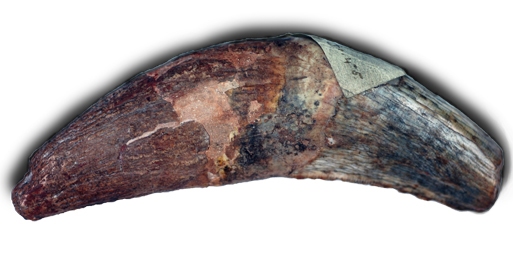
Scimitar cat researh gives unexpected results!
By: Barry Chandler
Added: 14 March 2013
The teeth of Homotherium latidens (Scimitar Cat) recovered from Kent's Cavern have been the subject of recent research by academics in the U.S and Canada. The teeth of this incredibly rare animal were found in the cave and have always been the source of controversy as to when exactly they date from. Torquay Museum provided comparitive samples so that flourine and uranium levels in the Homotherium teeth could be compared to other large carnivore teeth with known stratigraphy. The results were startling as the homomtherium teeth did not resemble the others found in the cave. While not solving the problem of thier age the findings have thrown up a new possibility. The teeth were almost certainly deposited for a considerable time at another location outside the cave and have been transported there, almost certainly by early humans. The question is were the trophy hunters neanderthals or the first modern humans? We may never know!
Latest news
-

DAWLISH MUSEUM AGM 14TH JULY
Dawlish Museum
-

Heritage Centre Open for the Summer Season
Bovey Tracey Heritage Centre
-

1586 Kingsbridge Platt on view for one day
Kingsbridge Cookworthy Museum
-

New Displays for 2026
Whimple Heritage Centre
-

Path closure during maintenance works
Dawlish Museum
-

Newly restored : Painting of Major General Sir Thomas Cobley
Kingsbridge Cookworthy Museum
-

William Cookworthy : A Man Of No Common Clay
Kingsbridge Cookworthy Museum
-

The Box is the Museum in Residence at Downing Street
The Box, Plymouth
-

Beryl Cook’s characters come to life across Plymouth
The Box, Plymouth
-

Paid Vacancy: Curator (Maternity Cover)
Newton Abbot Museum
-

Museum Opens for New Season!
Dawlish Museum
-

AGM 2025
Dawlish Museum
-

The David Clement Memorial Lecture: William S Lindsay, shipowner, politician and envoy
Topsham Museum
-

Secret Gardens Programmes on Sale now!
Topsham Museum
-

The Box wins second Muddy Stilettos award
The Box, Plymouth